What is Cold Forging? Process, Advantages and Uses in India
What is cold forging process in India — and why is it the most preferred method for fastener manufacturing? Cold forging is a metal forming process in which wire or rod is shaped into a desired form at room temperature using high compressive force. Unlike hot forging, no heat is applied — making cold forging faster, cleaner, and more cost-effective for producing bolts, screws, rivets, and other precision components.
In this complete guide, Samrat Machine Tools — cold forging machine manufacturer in Ludhiana, Punjab — explains everything you need to know about the cold forging process, its advantages, applications, and the machines used for cold forging in India.
What is Cold Forging?
Cold forging — also known as cold heading or cold forming — is a manufacturing process in which metal wire or rod is placed into a die and struck with a punch under high pressure at room temperature. The force reshapes the metal into the desired form without cutting or removing any material.
The key characteristic of cold forging is that the metal is worked below its recrystallization temperature — typically at room temperature or slightly above. This preserves the grain structure of the metal and results in components with superior mechanical properties compared to machined or cast parts.
Cold forging is widely used across India for producing fasteners, auto components, electrical fittings, and construction hardware at high speed and low cost.
How Does the Cold Forging Process Work?
The cold forging process involves a series of steps that transform raw wire rod into finished fasteners or components. Here is a step-by-step explanation of how the cold forging process works in a typical Indian fastener manufacturing plant.
Step 1 — Wire Rod Selection
The process begins with selecting the correct grade of wire rod — typically mild steel, alloy steel, or stainless steel — based on the final product requirements. Wire rod is purchased in coil form from steel mills and delivered to the fastener plant.
Step 2 — Wire Drawing and Annealing
The wire rod is drawn through a die to reduce its diameter to the exact size required for the fastener being produced. In some cases the wire is annealed — heated and slowly cooled — to improve its ductility and make it easier to cold forge without cracking.
Step 3 — Cold Forging and Heading
The drawn wire is fed into the cold forging header machine. The machine cuts the wire to the correct blank length, then uses a series of punches and dies to form the head of the fastener — bolt head, screw head, rivet head — in one or more blows at high speed. This is the core cold forging step.
Step 4 — Threading and Finishing
After cold forging, the blank is sent for thread rolling, heat treatment (if required), surface treatment (zinc plating, hot-dip galvanising, etc.), and quality inspection before packing and dispatch.
Advantages of Cold Forging Process in India
Cold forging offers significant advantages over other metal forming methods — which is why it is the preferred manufacturing process for fastener producers across India.
Higher Production Speed
Cold forging header machines operate at very high speeds — producing hundreds of fastener blanks per minute. This makes cold forging the fastest method for high-volume fastener production, significantly reducing per-unit manufacturing cost.
Superior Mechanical Strength
Because cold forging compresses and work-hardens the metal rather than cutting it, the finished components have a refined grain structure and higher tensile strength compared to machined parts. This is critical for safety-critical fasteners used in automotive and construction applications.
Minimal Material Waste
Cold forging is a near-net-shape process — the wire is formed into the final shape with very little material removed. This results in significantly less raw material waste compared to machining, reducing material cost per component.
Excellent Surface Finish
Cold forged components have a smooth, consistent surface finish directly from the machine — reducing or eliminating the need for additional finishing operations and lowering overall production cost.
Tight Dimensional Tolerances
Cold forging produces components with very consistent dimensions across large production runs. This dimensional consistency is essential for fasteners that must meet IS, DIN, or ISO standards.
Lower Energy Consumption
Unlike hot forging which requires heating furnaces, cold forging works at room temperature — consuming significantly less energy and reducing production cost per piece.
Cold Forging Applications in India
The cold forging process is used across a wide range of industries in India. Some of the most important applications include: , expansion bolts, and structural fasteners India’s fastener industry — concentrated in Ludhiana (Punjab), Faridabad (Haryana), Mumbai (Maharashtra), and Rajkot (Gujarat) — is one of the largest consumers of cold forging machines in Asia.
- Bolt and nut manufacturing for construction, automotive, and general engineering
- Screw manufacturing for electronics, furniture, and industrial use
- Rivet manufacturing for automotive body, aircraft, and structural applications
- Auto component manufacturing — wheel bolts, engine fasteners, chassis components
- Electrical terminal bolts, grounding screws, and panel fasteners
- Agricultural equipment fasteners for tractors and farm implements
- Construction anchors, expansion bolts, and structural fasteners
India’s fastener industry — concentrated in Ludhiana (Punjab), Faridabad (Haryana), Mumbai (Maharashtra), and Rajkot (Gujarat) — is one of the largest consumers of cold forging machines in Asia.
What Machine is Used for Cold Forging?
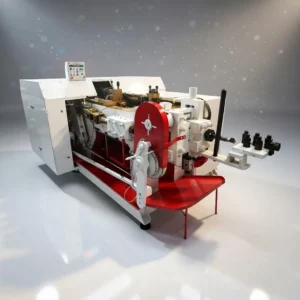
The primary machine used for the cold forging process is the cold forging header machine — also called a cold heading machine or cold forging press. This machine takes wire rod as input, cuts it to length, and forms the head of the fastener using a series of punches and dies at high speed
Cold forging header machines are available in:
- Single-die single-blow configuration — for simple headed fasteners
- Single-die double-blow configuration — for more complex head shapes
- Multi-die progressive configuration — for high-complexity components
The most widely used type in Indian fastener plants is the pneumatic clutch type cold forging header machine — which offers the best combination of speed, reliability, and ease of maintenance for Indian manufacturing conditions.
Cold Forging Machine Manufacturer in Ludhiana — Samrat Machine Tools
Samrat Machine Tools is a leading cold forging header machine manufacturer based in Ludhiana, Punjab. With over 35 years of experience supplying cold forging machines to fastener manufacturers across India, we understand the exact requirements of Indian fastener plants.
Our pneumatic clutch type cold forging header machine is designed for high-speed, high-volume fastener production — delivering consistent precision, low maintenance, and long service life.
→ Learn more about our Cold Forging Header Machine — specifications, features and price.
→ Contact us in Ludhiana for a free quote and machine demonstration
Frequently Asked Questions — Cold Forging Process
What is cold forging in simple terms?
Cold forging is a process of shaping metal wire into bolts, screws, rivets, or other components at room temperature using high pressure dies and punches — without heating the metal.
What is the difference between cold forging and hot forging?
Cold forging is done at room temperature while hot forging requires heating the metal to high temperatures. Cold forging produces stronger, more dimensionally accurate components with less material waste and higher production speed.
What materials can be cold forged?
The most commonly cold forged materials in India are mild steel, medium carbon steel, alloy steel, stainless steel, aluminium, and copper. Material selection depends on the final product requirements.
Is cold forging used in India?
Yes — cold forging is widely used across India in fastener manufacturing, automotive component production, construction hardware, electrical fittings, and agricultural equipment manufacturing. Ludhiana in Punjab is one of India’s most important cold forging manufacturing hubs
What is a cold forging header machine?
A cold forging header machine is the primary machine used in the cold forging process. It takes wire rod as input, cuts it to blank length, and forms the fastener head using punches and dies at high speed. It is the core machine in any bolt or screw manufacturing plant.
Conclusion
Cold forging is the backbone of India’s fastener manufacturing industry — delivering high speed, superior strength, minimal waste, and consistent quality that no other metal forming process can match at scale. Whether you are setting up a new fastener plant or expanding your existing production capacity, investing in the right cold forging machine is the most important decision you will make.
Samrat Machine Tools in Ludhiana has been helping Indian fastener manufacturers make that decision for over 35 years. Contact us today for expert guidance, machine specifications, and the best price on a cold forging header machine in India.